
What if – as opposed to the traditional 9-5 office towers, we can have them used 24/7, to their fullest potential?
Harvard University Graduate School of Design (GSD)
Fall 2020 – MArch Thesis
Thesis Advisor: Belinda Tato
Featured on @gsdthesis Instagram
As the world’s population continues to migrate and gravitate towards cities for more opportunities (at the rate of 1 million per week), perennial challenges in today’s urban communities – congestion, density, and high costs of living – will only become exacerbated. On the other hand, buildings and land plots in cities have yet reached their potentials. According to U.S. Energy Information Administration (USEIA), in 2018, residential and commercial buildings accounted for about 40% of total U.S. energy consumption, yet buildings are often designed only to be used for a third of a day’s time at any given point. In addition, while zoning policies help ensure healthy urban growth, these strict delineations between different land uses can limit the possibilities of innovations in mixed-use opportunities.
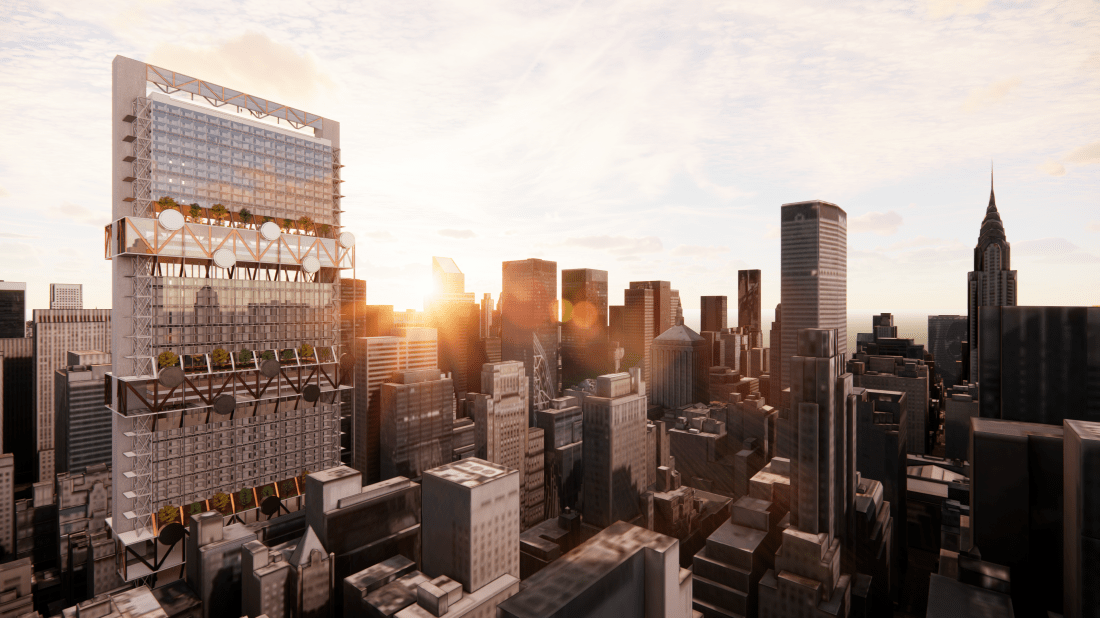
Progress is already in place – the work-from-home model emerged out of the current pandemic can be seen as a hybrid between residential and commercial (office) land use, while online shopping is effectively merging the residential and retail zoning. By identifying and leveraging vacancies and opportunities present in today’s cities and buildings, the project speculates on a new mixed-use model that defines ownership and use of space through the dimension of time and that can be fluid throughout the day and week to accommodate different needs and demands. An office during the day could be a restaurant in the evening, while a theatre during the evening could be bedrooms at night… The possibilities are endless. This will truly maximize the value embedded in today’s buildings and lands and create positive benefit and impact across the economic (more affordable), social (more interaction), and environmental (less emission) realms.


 George H. Zhang